-
 18 Juil. 26Finalisé
Melodies without borders: A tribute to Teresa Berganza | Saturday Classics
Teresa Berganza (1933–2022) was one of the foremost vocal interpreters of the twentieth century. Beyond her extraordinary technical mastery and the success she achieved on the world's leading opera stages, her legacy rests upon a conception of singing founded on absolute respect for both music and text. Her philological rigor, fidelity to each composer's style, and constant pursuit of naturalness in expression established her as an interpretative model that continues to inspire generations of musicians.
For Berganza, the boundaries between languages, musical styles, and traditions never constituted a limitation. The recital occupied a central place throughout her artistic career, allowing her to move with equal authenticity through the German Lied, the French mélodie, Catalan song, the Spanish art song, the Ibero-American repertoire, and the great masterpieces of lyric theatre.
Melodies Without Borders brings together a selection of works that Teresa Berganza performed and recorded throughout her career, offering a journey through her musical universe across different languages, cultures, and aesthetic traditions, all united by a common thread: the search for the deepest meaning of the word, fidelity to the text, the style, and the composer's musical thought.
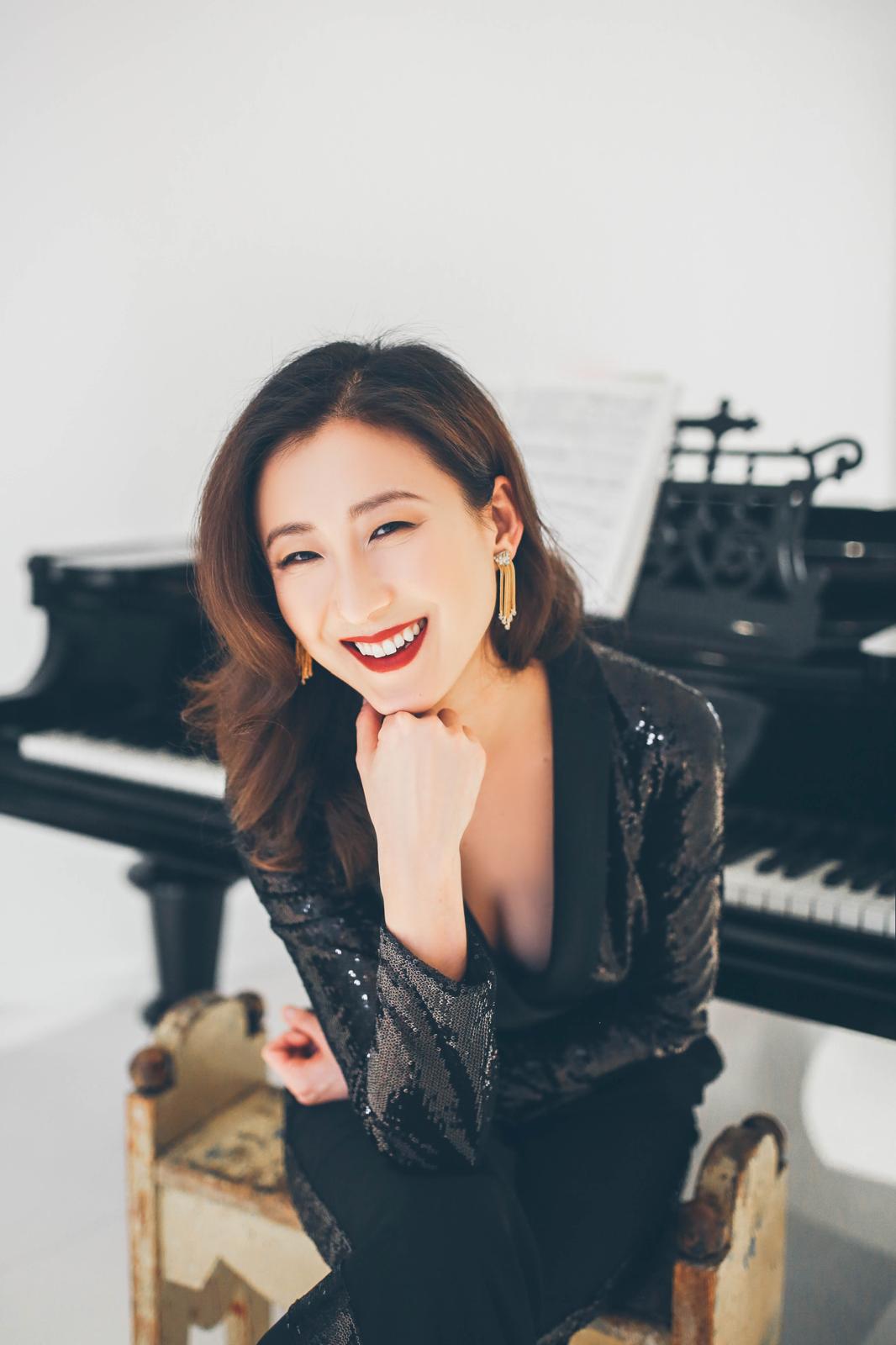
This tribute is born out of admiration for an artist who understood that interpretation is far more than singing: it is reading, understanding, and bringing every word to life with rigor, intelligence, and an interpretative elegance that avoided all artificiality. In this spirit, Mar Esteve i Rodrigo, mezzo-soprano, and Soojeong Joo, pianist, invite audiences to rediscover Teresa Berganza's artistic legacy through works drawn from her recital repertoire.
Performers: Mar Esteve i Rodrigo – mezzo-soprano. Soojeong Joo – piano.
Selected Repertoire
Hugo Wolf (1860–1903)
Mörike-Lieder
Verborgenheit (Seclusion)
Text: Eduard Mörike.The poetic voice asks that no one attempt to penetrate their inner world. They do not reveal the source of their sorrow, but simply claim the right to preserve, in silence, both their grief and their joy.
Johannes Brahms (1833–1897)
Schön war, das ich dir weihte (Beautiful Was What I Dedicated to You)
Text: Georg Friedrich Daumer, after a traditional Turkish poem.The poetic voice recalls the gifts once offered to the beloved—jewels, music, and even the heart itself—and laments that such love was never returned.
Gabriel Fauré (1845–1924)
Trois mélodies, Op. 7
Après un rêve (After a Dream)
Text: Romain Bussine.The protagonist recounts a dream in which they escaped with their beloved to an ideal place. Upon awakening, they realize that such happiness existed only within the dream and long to return to it.
Claude Debussy (1862–1918)
Deux Romances
Romance
Text: Paul Bourget."L'âme évaporée et souffrante…"
The poem evokes the memory of a lost love. The poetic voice wonders what remains of that shared happiness and searches, in vain, for traces of the hope, fidelity, and peace once experienced.
Joaquín Turina (1882–1949)
Poema en forma de canciones, Op. 19
Cantares
Text: Ramón de Campoamor.The poem contrasts the way people speak about love with the way it is actually experienced. Through aphorisms and brief reflections, it reveals the contradictions between romantic idealization and lived experience.
Frederic Mompou (1893–1987)
Combat del somni
Damunt de tu només les flors (Only Flowers Upon You)
Text: Josep Janés.Written as an offering to someone absent, the poem suggests that flowers are the only possible gift in the face of an irrevocable loss. Memory and mourning are expressed without overt lament, through a gesture of profound restraint.
Xavier Montsalvatge (1912–2002)
Cinco canciones negras
Cuba dentro de un piano (Cuba Inside a Piano)
Text: Rafael Alberti.The poem evokes a vanished Cuba through memory. The piano becomes a symbol of remembrance, preserving a lost world where nostalgia coexists with references to the Caribbean imagination.
Carlos Guastavino (1912–2000)
Doce canciones populares
Bonita rama de sauce (Lovely Willow Branch)
Text: Arturo Vázquez.The poem uses the willow branch as a symbol of longing and absent love. Nature accompanies the expression of an intimate feeling of loss and patient waiting.
Wolfgang Amadeus Mozart (1756–1791)
Le nozze di Figaro, K. 492
"Voi che sapete che cosa è amor" (You Who Know What Love Is)
Libretto: Lorenzo Da Ponte.Cherubino sings this aria before the Countess and Susanna. Unable to understand the emotions overwhelming him, he asks them to explain the nature of love while describing the restlessness of first love.
Gioachino Rossini (1792–1868)
La Cenerentola ossia La bontà in trionfo
"Nacqui all'affanno… Non più mesta" (Born to Sorrow... No Longer Sad)
Libretto: Jacopo Ferretti.At the conclusion of the opera, Angelina celebrates the end of her suffering. Rather than seeking revenge on her family, she proclaims forgiveness as the proper response to the injustices she has endured.
Federico Chueca (1846–1908) and Joaquín Valverde (1846–1910)
La Gran Vía
"Tango de la Menegilda"
Libretto: Felipe Pérez y González.Menegilda, a Madrid maidservant, humorously describes her circumstances and aspirations. The number offers an ironic portrait of everyday popular life in Madrid at the end of the nineteenth century.
FREQUENTLY ASKED QUESTIONS (FAQS):
-
All tickets include access to both the exhibitions and the concert.
-
Seats are assigned according to the order of reservation. No seat changes will be allowed once assigned.
-
Entry to the concert hall will take place between 17:50 and 18:00. Once the concert begins, no further entry will be allowed.
-
The exhibition can be visited either before or after the concert, keeping in mind that the museum closes at 20:00.
-
The exhibition tour takes approximately 45 minutes.
-
Showing your ticket or reservation on your mobile device is sufficient; printing is not necessary.
-
The museum reserves the right to cancel any unpaid reservation 5 minutes before the start of the concert. Therefore, we recommend arriving at the box office 30 minutes early.
-
For advance ticket purchases: no refunds will be available after 18:00. If the user has not notified the museum of their delay or absence before the concert, the ticket may be reassigned to another visitor starting from 18:00.

Cet événement fait partie de
-
L’Agenda